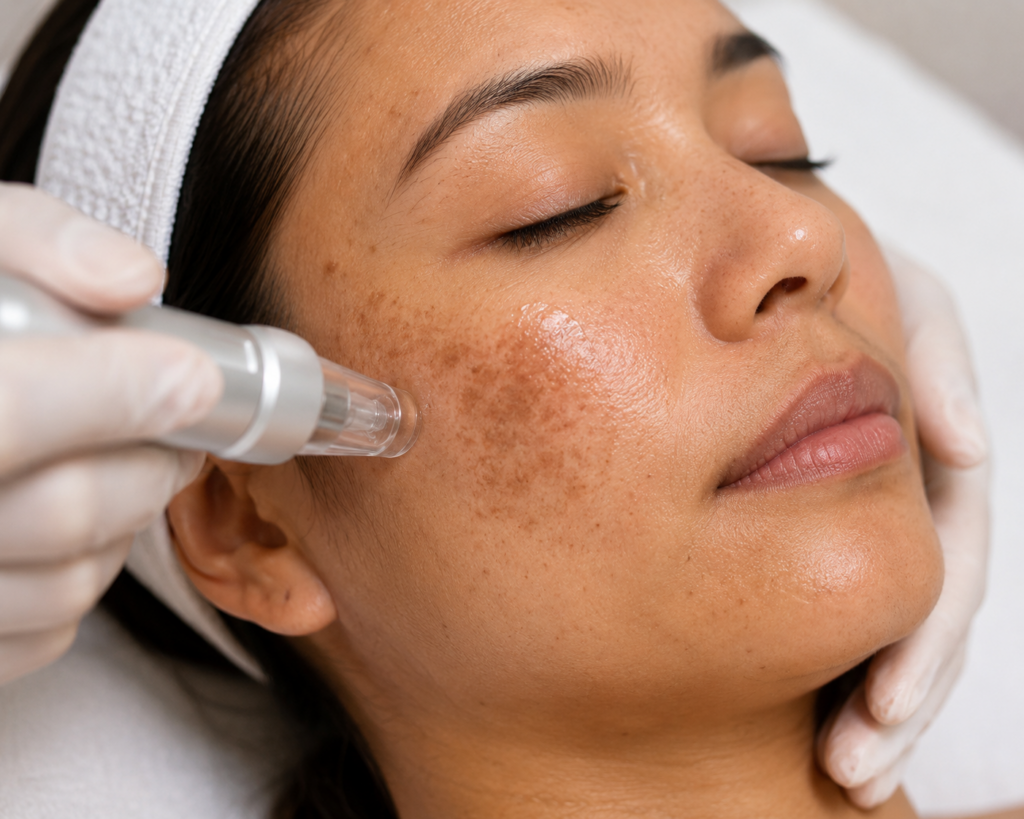
Pigmentation is a common skin concern that affects people of different ages and skin types. It appears when certain areas of the skin become darker than the surrounding skin. These dark patches or spots can develop on the face, forehead, cheeks, upper lip, neck, and other parts of the body. Sun exposure, hormonal changes, acne marks, ageing, and skin irritation are some common causes of pigmentation.
Choosing the right treatment is important because every skin type has different needs. Some people have oily skin, while others have dry, sensitive, or combination skin. A treatment that works well for one person may not be suitable for another. This is why professional skin assessment is an important first step.
At Altaderma Clinic, patients can learn about different approaches to improving uneven skin tone and managing dark spots. Understanding your skin type, the cause of pigmentation, and suitable treatment options can help you make better skincare decisions.
In this article, we will discuss different types of pigmentation, treatment options, skin-specific considerations, and factors that influence treatment costs.
Understanding Different Types of Pigmentation at Altaderma Clinic
Before choosing a treatment, it is important to understand what type of pigmentation you have. Pigmentation can develop for different reasons, and identifying the cause helps determine the most suitable approach.
Sunspots and Age-Related Pigmentation
Sunspots are dark marks that develop after repeated exposure to sunlight. They commonly appear on areas that receive regular sun exposure, such as the face, hands, shoulders, and neck.
People who spend a lot of time outdoors may notice these spots becoming darker over time. Proper sun protection and suitable skincare treatments can help improve their appearance.
Melasma and Hormonal Pigmentation
Melasma appears as brown or grey-brown patches, usually on the cheeks, forehead, nose, and upper lip. Hormonal changes, pregnancy, certain medications, and sunlight can contribute to its development.
Melasma can be difficult to manage because it may return even after improvement. A personalised treatment plan and regular sun protection are important for managing this condition.
Post-Inflammatory Hyperpigmentation
Post-inflammatory hyperpigmentation develops after skin inflammation or injury. It commonly appears following acne, pimples, insect bites, or irritation caused by unsuitable skincare products.
People with darker skin tones may be more likely to develop noticeable dark marks after inflammation. Gentle skincare and appropriate pigmentation treatments can help improve uneven skin tone.
Choosing Pigmentation Treatment in Dubai According to Your Skin Type
Your skin type plays an important role when selecting a pigmentation treatment. A professional assessment helps identify your skin's condition and determine which options may be suitable.
Pigmentation Treatment for Oily Skin
Oily skin produces more natural oil, which can contribute to clogged pores and acne. When acne heals, it may leave dark marks that make the skin tone appear uneven.
For oily skin, a dermatologist may recommend suitable ingredients such as salicylic acid, azelaic acid, or other pigmentation-focused skincare products.
Depending on the type of pigmentation, professional treatments may also be considered.
At Altaderma Clinic, patients can discuss their oily skin concerns and understand how to approach dark spots without unnecessarily irritating the skin.
Pigmentation Treatment for Dry Skin
Dry skin often feels rough, tight, or uncomfortable. Some people also experience flaking and sensitivity, which can make certain pigmentation treatments difficult to tolerate.
For dry skin, the treatment approach should focus on maintaining hydration and supporting the skin barrier.
Suitable skincare may include:
- Gentle cleansers.
- Moisturisers containing ceramides.
- Hydrating ingredients such as hyaluronic acid.
- Dermatologist-recommended pigmentation products.
- Daily sunscreen.
Avoiding harsh exfoliation is important because excessive irritation can make pigmentation more noticeable.
Pigmentation Treatment for Sensitive Skin
Sensitive skin can react easily to skincare products, fragrances, and strong active ingredients. Redness, itching, burning, and irritation may occur when unsuitable products are used.
For this skin type, gentle treatment options are usually preferred. A dermatologist may recommend introducing active ingredients slowly and avoiding unnecessary exfoliation.
Patients should always discuss previous allergic reactions and skin sensitivities before starting treatment.
Pigmentation Treatment for Combination Skin
Combination skin usually has an oily T-zone and drier areas around the cheeks. This means different parts of the face may require different skincare approaches.
A personalised plan can help balance oil production, maintain hydration, and address pigmentation without over-drying the skin.
What Are the Best Pigmentation Treatment Options in Dubai?
There are several treatment options available for pigmentation. The most suitable choice depends on the cause, depth, location, and severity of the dark spots.
Topical Creams and Medical Skincare Products
Topical products are commonly used to improve uneven skin tone. Depending on the condition, a dermatologist may recommend ingredients such as:
- Vitamin C to support a brighter-looking complexion.
- Azelaic acid to help manage pigmentation and acne-related marks.
- Retinoids to support skin renewal.
- Kojic acid to help reduce excess pigmentation.
- Hydroquinone when medically appropriate and prescribed.
Not every ingredient is suitable for every skin type. Some products can cause dryness, irritation, or increased sensitivity when used incorrectly.
Chemical Peels for Uneven Skin Tone
Chemical peels use specially selected solutions to exfoliate the outer layers of the skin. They can help improve certain types of pigmentation, acne marks, and uneven texture.
The strength and type of peel should be selected according to the patient's skin condition and sensitivity.
People with darker skin tones need particular care because aggressive peels can sometimes cause additional pigmentation. A professional assessment is important before treatment.
Laser Treatments for Pigmentation
Laser treatments use controlled light energy to target certain types of unwanted pigment in the skin. They may be considered for selected sunspots and other pigmentation concerns.
However, laser treatments are not suitable for every pigmentation condition. Melasma, for example, can sometimes become worse after procedures if the wrong approach is used.
The patient's skin tone, pigmentation depth, and medical history should be considered before choosing laser treatment.
Combining Treatments for Better Skin Management
Some patients may benefit from a combination of professional treatments and home skincare. For example, a dermatologist may recommend topical products along with carefully selected in-clinic procedures.
The combination depends on the type of pigmentation and the patient's skin response. Treatment should always be planned carefully rather than using several strong procedures at once.
How to Find the Best Pigmentation Treatment in Dubai for Your Skin Concerns
Choosing a suitable treatment involves more than selecting a popular skincare procedure. It requires understanding the cause of pigmentation and identifying options that match your skin's needs.
Why Skin Assessment Is Important at Altaderma Clinic
A professional skin assessment helps identify the type of pigmentation, its location, and possible triggers.
During a consultation at Altaderma Clinic, patients can discuss concerns such as:
- Dark patches on the cheeks and forehead.
- Acne-related dark marks.
- Sunspots and uneven skin tone.
- Hormonal pigmentation.
- Skin sensitivity and irritation.
- Previous pigmentation treatments.
This information helps guide treatment decisions and establish realistic expectations.
Selecting Treatment According to Pigmentation Depth
Pigmentation can develop at different depths within the skin. Some dark spots are closer to the surface, while others extend into deeper layers.
Superficial pigmentation may respond to topical skincare or selected procedures. Deeper pigmentation may require a longer treatment approach.
Understanding pigmentation depth is important because not every treatment works in the same way.
Pigmentation Treatment Cost in Dubai: What Should You Expect?
The price of pigmentation treatment can vary depending on the patient's skin condition and the selected treatment method. Some people need only skincare products, while others may require several professional sessions.
Factors That Influence Pigmentation Treatment Cost in Dubai
The Pigmentation Treatment cost in Dubai may depend on several factors, including:
- Type and severity of pigmentation.
- Size of the affected skin area.
- Selected treatment method.
- Number of sessions required.
- Products used during treatment.
- Professional consultation and follow-up requirements.
For example, the cost of topical treatment may differ from the cost of laser procedures or chemical peels.
Why a Personalised Treatment Plan Matters for Cost
Not every patient needs the same number of sessions or treatment combination. Some pigmentation concerns may improve with a suitable skincare routine, while others need ongoing professional management.
At Altaderma Clinic, patients can discuss their skin concerns and ask about suitable treatment options and their expected costs.
Understanding the treatment plan in advance helps patients make informed decisions according to their needs and budget.
Daily Skincare Tips to Prevent Pigmentation From Getting Worse
Professional treatment is only one part of managing pigmentation. Daily skincare habits also play an important role in maintaining a more even skin tone.
Use Sunscreen Every Day
Sun exposure can darken existing pigmentation and contribute to the development of new dark spots.
Choose a broad-spectrum sunscreen with SPF 30 or higher. For melasma and darker skin tones, a tinted sunscreen containing iron oxides may offer additional protection against visible light.
Reapply sunscreen every two hours when outdoors and after swimming or sweating.
Follow a Gentle Skincare Routine
Using too many active products can irritate the skin. A simple routine with a gentle cleanser, suitable moisturiser, and sunscreen can help support skin health.
Avoid harsh scrubs and products that cause burning or stinging.
Avoid Picking Pimples and Dark Spots
Picking or squeezing pimples can cause additional inflammation and increase the risk of post-inflammatory hyperpigmentation.
Allowing the skin to heal naturally and treating acne properly can help reduce the development of new dark marks.
How Long Does Pigmentation Treatment Take to Show Results?
The time needed to see improvements depends on the type of pigmentation, its depth, the selected treatment, and individual skin response.
Some superficial dark spots may begin improving within a few weeks or months. Melasma and deeper pigmentation may require longer management and regular maintenance.
Patients should understand that pigmentation can return, especially when the skin is exposed to sunlight without proper protection.
Following professional advice and maintaining a consistent skincare routine can help support longer-term improvements.
Conclusion: Choose the Right Pigmentation Treatment at Altaderma Clinic
Choosing the right pigmentation treatment starts with understanding your skin type and identifying the cause of dark spots. Whether you have oily, dry, sensitive, or combination skin, the treatment approach should match your individual skin needs.
From topical skincare and chemical peels to selected laser treatments, different options can help improve uneven skin tone when chosen appropriately.
At Altaderma Clinic, patients can explore suitable approaches for their pigmentation concerns and understand the importance of personalised skincare. If you are considering Pigmentation Treatment in Dubai, discussing your skin condition, treatment options, and Pigmentation Treatment cost in Dubai during a professional consultation can help you make an informed decision about achieving a healthier and more even-looking complexion.
Comments